Scroll through any solar-related WhatsApp group or Facebook page in India today and you will likely spot the same offer: a brand new TOPCon solar panel, fully warrantied, for just ₹5,000. It sounds like the deal of a lifetime. It is not.
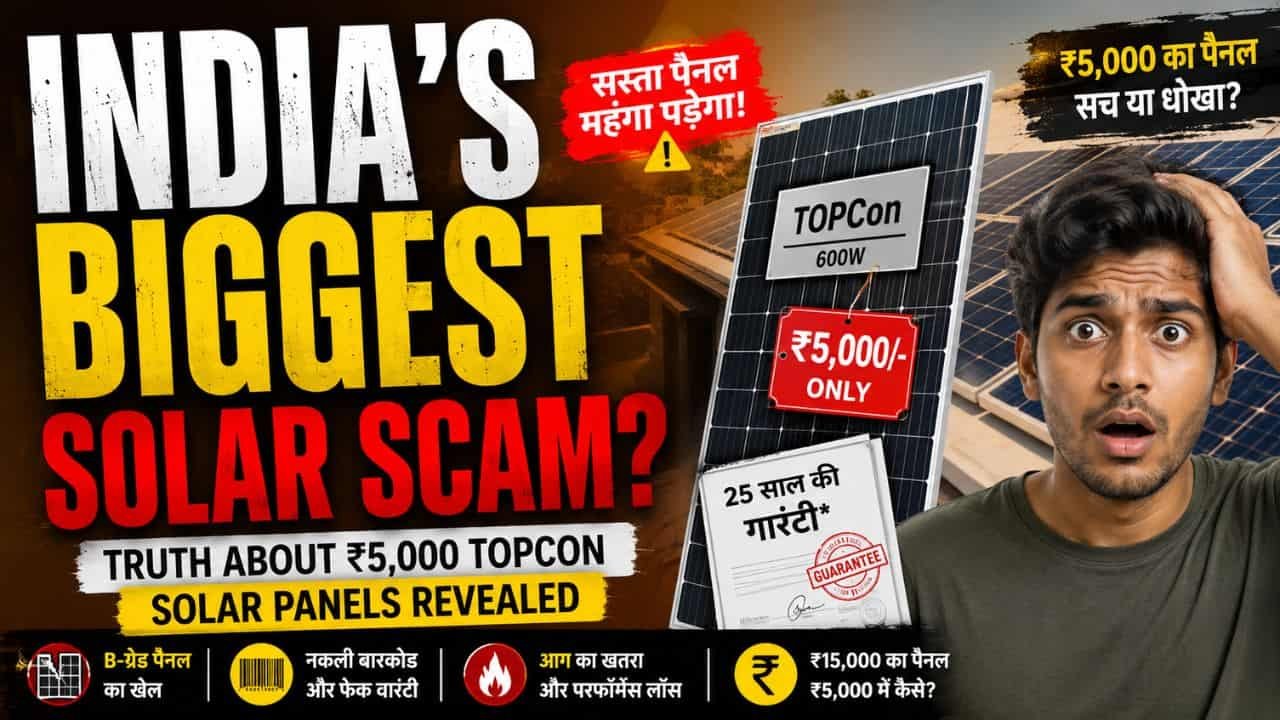
Lakhs of middle-class Indian households, tired of rising electricity bills, are falling for what experts now call one of the country’s most organized B-grade solar panel scams. Here is the full breakdown of how it works and how to protect yourself.
The Math That Doesn’t Add Up
A genuine 600W TOPCon panel requires high-grade silicon wafers, silver paste, 3.2mm tempered glass, and a heavy-duty aluminium frame. As of 2026, market data shows genuine TOPCon panels priced between ₹20 and ₹28 per watt, which puts a real 600W panel between ₹15,000 and ₹18,000.
No factory or authorized dealer sells a ₹15,000 product at a loss for ₹5,000. If a deal looks too good to be true on solar pricing, it almost always is.
| Panel Type | Price Range (600W) | Annual Degradation |
| Genuine TOPCon (A-Grade) | ₹15,000 to ₹18,000 | 0.5% to 0.7% |
| Rejected/B-Grade Panel | ₹5,000 to ₹8,000 | 2% to 5% or higher |
Where Cheap Panels Actually Come From
Before any panel leaves a Tier-1 factory, it undergoes an Electroluminescence (EL) test, essentially an X-ray for solar cells. This process detects invisible micro-cracks and dead cells inside the silicon wafer. Industry sources confirm that EL testing remains the standard method manufacturers use to catch hidden defects that no visual inspection can spot.
Panels that fail this test get a red cross marking and are sold to scrap dealers by weight. Inside unregulated warehouses, these rejected panels go through a cosmetic makeover: cracked frames are swapped for cheaper aluminium ones, glass is chemically polished, and the original reject sticker is removed with a heat gun and replaced with a fresh barcode claiming bifacial TOPCon technology.
The warranty card handed over at the shop counter is issued by the seller, not the original manufacturer, so it carries no real legal backing once the panel fails.
Why the Damage Shows Up Later, Not Immediately
Micro-cracks do not cause instant failure. They widen gradually under daily thermal cycling, sometimes taking one to four years to fully open up. By the time output drops noticeably, the seller has already made nine to ten times their cost back, leaving the customer to either replace the panel or buy another one altogether.
This is exactly why genuine panels degrade at roughly 0.5 to 0.7 percent per year, while rejected B-grade or C-grade panels can degrade at 2 to 5 percent annually, sometimes losing 30 to 50 percent of their output within just a decade.
Three Simple Tests to Spot a Fake Panel
Before paying for any solar panel, run these checks:
- Cell gap and busbar alignment: A genuine panel shows a perfectly uniform gap between every cell, with busbars in straight alignment.
- Logo placement: If the brand logo sits on a barcode sticker stuck on top of the glass rather than laminated inside it, the panel is fake or B-grade.
- Physical dimensions: Compare the panel’s actual size against the manufacturer’s official specification sheet for that wattage. A smaller-than-standard size usually means an older, refurbished cell has been repackaged under a new sticker.
Beyond these, always confirm the panel is listed under the ALMM approved list of solar manufacturers, since unlisted panels can also disqualify you from the PM Surya Ghar subsidy.
Why “It Lasted 5 Years” Isn’t a Win
Some buyers argue that even a fake panel running for four or five years is still a fair trade for a ₹10,000 discount. The real problem is safety, not just savings. Open micro-cracks can cause busbar short-circuits, and that raises genuine fire risk inside the junction box, a hazard that has been documented in multiple industry safety reviews.
A panel meant to perform at 80 percent capacity for 25 years has no business losing 20 to 30 percent of its output within just five.
Frequently Asked Questions
How can I verify if a solar panel is ALMM listed? Search the panel’s model and manufacturer name on the official MNRE ALMM portal before purchase to confirm it qualifies for subsidy and meets quality standards.
Does a cheap solar panel void my PM Surya Ghar subsidy? Yes, panels that are not BIS certified or not on the ALMM list are typically ineligible for the central government subsidy.
Can a damaged solar panel really catch fire? Yes, micro-cracks that lead to busbar shorting can create hotspots, which in rare but documented cases has caused panel fires.
What warranty proof actually protects a buyer? Only a warranty registered directly with the original manufacturer counts; a shopkeeper’s printed warranty card has no legal value if the company never recorded the sale.