You invested in solar to cut your electricity bills, but dust, bird droppings and water stains can quietly eat into your savings. The good news is that solar panel cleaning is simple once you know the right method.
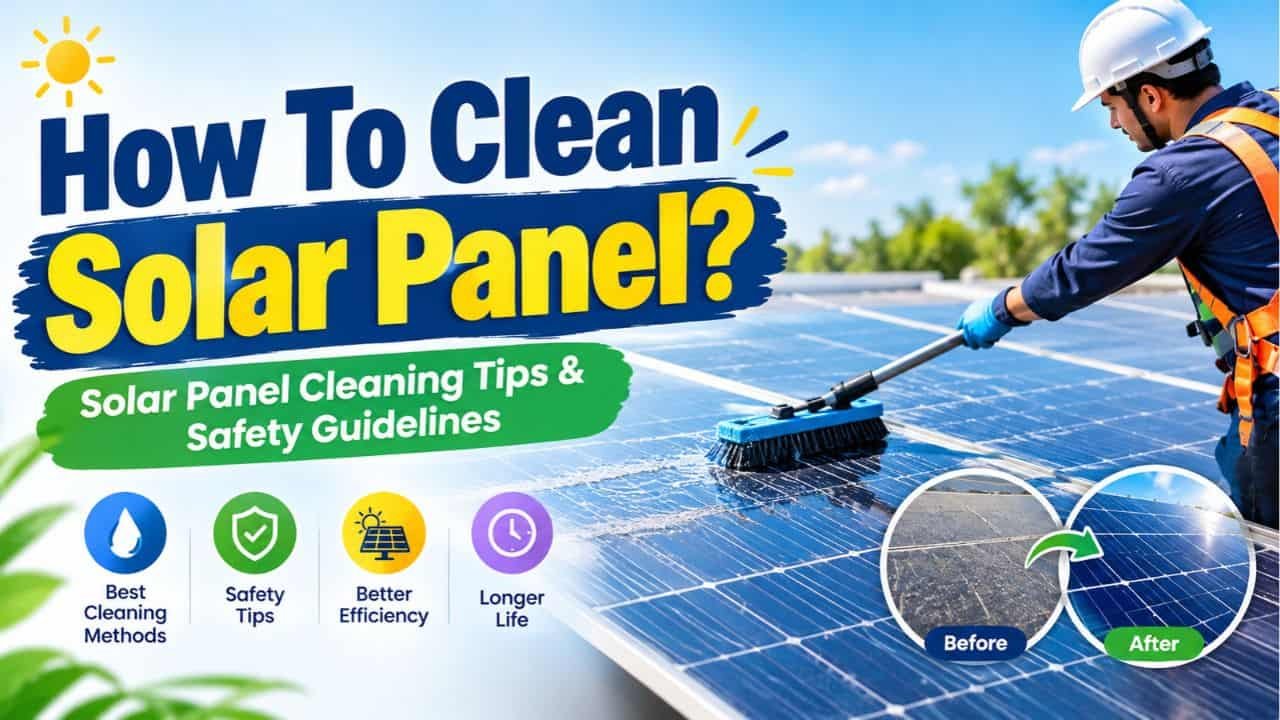
This guide is based on a full year of real-world experience with a 5 kW rooftop solar system that was washed every 15 days. After one year, it still produced the same 34 units per day as when it was new. Below you’ll find the tools, timing, safety rules and a proven 5-step process.
Why Is Solar Panel Cleaning Important?
Solar panels work only when sunlight reaches the cells. A layer of dust, pollen or bird droppings blocks that light and lowers output.
In the real-world test above, a dirty 5 kW Solar system produced only 28–29 units per day. After a proper wash, generation jumped to 34 units per day, an increase of about 5 units daily.
Dirt also does more than reduce output:
- Shadows on a few cells can cause hot spots and damage.
- Water marks and residue can become permanent if left too long.
- Panels in a series string perform only as well as the weakest panel, so one dirty panel drags down the whole string.
Solar Panel Cleaning Safety Guidelines
Panels with no sunlight on them aren’t generating power, so the shock risk is low. Still, a few precautions are smart.
Basic Safety Tips
- Switch off the solar MCB near your meter if you can.
- Water the earthing pit so any stray current flows safely to the ground.
- Wear rubber slippers or shoes while washing.
- Avoid touching the metal structure with wet hands.
- Never climb on the panels. Standing on them can cause micro-cracks in the cells.
Inspect Before You Clean
Take two minutes to check these things first:
- Stones or debris lying on the panels
- Cracks in the glass (do not wash a cracked panel, as water can enter and cause damage)
- Wiring and insulation, since birds sometimes damage cable coverings
- Loose connectors or frames
Tools and Materials You Need
You don’t need expensive equipment. A basic setup is enough:
| Tool / Material | Purpose | Notes |
| Pressure washer (optional) | Removes loose dust | Use spread mode only |
| Bucket or hose pipe | Water supply | A good alternative to a pressure washer |
| pH-neutral shampoo | Dissolves fine, sticky dust | No wax, no acidic cleaners |
| Microfibre cloths | Gentle scrubbing and drying | Soft, lint-free |
| Mop with microfibre cover | Reaches panel corners | Sponge mop also works |
| Foam spray bottle | Spreads shampoo evenly | Saves shampoo |
| Ladder | Safe access | Needed on both sides for large plants |
Best Time To Clean Solar Panels
Clean your panels early in the morning before sunrise or in the evening after the sun has gone. Avoid cleaning in direct sunlight.
Here is why:
- Hot panels and cold water can cause thermal stress.
- Shampoo dries quickly in sun and leaves stubborn residue.
- Active panels are generating electricity while you work.
A Real Safety Warning
Morning cleaning has a hidden danger. In one case, a wet microfibre cloth was left on a panel for just two minutes. As the sun came out, the wet cloth shaded a few cells, which began to heat up, and smoke started coming out. A little longer and the back-sheet plastic could have melted or caught fire. Evening cleaning avoids this risk and gives you plenty of time.
How To Clean Solar Panels: 5-Step Method
Step 1: Rinse Off Loose Dust
Wash the panels with plain water to remove large dust particles. If you use a pressure washer, always choose spread mode, not pointed mode. A strong, narrow jet can damage the frame sealing. Keep a little distance too, because panels have a thin anti-reflective coating.
Step 2: Apply pH-Neutral Shampoo
Plain water can’t remove fine, sticky dust. Spray a pH-neutral car shampoo over the panels using a foam bottle. Avoid waxy or acidic shampoos. If you don’t have a pressure washer, skip the rinse in Step 1 and go straight to this step with a bucket.
Let the shampoo sit for about 5 minutes so the micro dust dissolves.
Step 3: Scrub Gently With Microfibre
Wipe the surface with a microfibre cloth or mop. This step is essential for removing:
- Bird droppings
- Sticky residue from seeds and bird droppings
- Stubborn micro dust
Soaking the dirt first makes it come off easily. A mop with a microfibre cover is helpful because it reaches corners that a hand cloth can’t.
Step 4: Rinse Off the Shampoo
Rinse with clean water until all foam is gone. Any shampoo left behind will attract dust and leave marks.
Step 5: Dry Wipe the Panels
Many people skip this step, but it matters. Wipe the panels with a dry microfibre cloth or mop. Without drying:
- Water droplets leave spots as they evaporate.
- Water collects at the bottom edge and can damage the last row of cells.
Why Panel Edges Need Extra Attention
Water and dust collect at the lower edge of the panel frame, especially after light rain. When it dries, it leaves visible marks and can harm the cells nearest the edge.
- Wipe the edges thoroughly after every full wash.
- Consider drain clips, which help water flow off the panel.
- Some manufacturers leave a small gap at the bottom edge, while others have none, so check your panel design.
How Often Should You Clean Solar Panels?
The right schedule depends on your location, surrounding dust, installation height and weather. Panels on higher floors usually need less cleaning.
| Season | Recommended Frequency |
| Monsoon | Once a month |
| Winter | Every 15 days |
| Summer | Every 15 days, or weekly for maximum generation |
| Dusty or farm areas | More often, especially in summer |
A Practical Cleaning Routine
Washing every week is tiring and rarely necessary. Try this schedule:
- 1st of the month: Complete all 5 steps (about 1 hour for a 5 kW system)
- 15th of the month: Only Step 1, or Steps 1, 2 and 4
Common Solar Panel Cleaning Mistakes To Avoid
- Cleaning in direct sunlight
- Using waxy, acidic or abrasive products
- Using a pressure washer in pointed mode
- Climbing on the panels
- Leaving wet cloths on the glass
- Skipping the dry-wipe step
- Cleaning only some of the panels
- Relying on rain to clean the panels
Rain does not clean panels properly. It often pushes dust to the bottom edge and leaves marks behind.
Manual vs Automated Cleaning Systems
Automated pipe or sprinkler systems sound convenient, but plain water alone cannot remove fine, sticky dust and bird droppings. For most homes, manual cleaning with shampoo and microfibre works better and costs less.
Bonus Tips From Experts
- Use soft or filtered water if your area has hard water, as mineral deposits can leave white spots.
- Check your panel warranty for any cleaning guidelines from the manufacturer.
- Hire a professional if your roof is steep, high or hard to access.
- Track daily generation on your inverter app. A sudden drop is a sign to clean.
Frequently Asked Questions (FAQs)
1. Can I clean solar panels with just water?
Water removes loose dust, but fine, sticky dust and bird droppings need pH-neutral shampoo and gentle scrubbing for a complete clean.
2. Is it safe to clean solar panels at home myself?
Yes, if you follow the safety rules. Clean when there is no sunlight, wear rubber footwear, check for cracks and wiring damage first, and never walk on the panels.
3. Can I use a pressure washer on solar panels?
Yes, but only in spread mode from a safe distance. A pointed jet can damage the frame sealing and the anti-reflective coating.
4. Does cleaning really increase solar power generation?
Yes. In the real example above, a 5 kW system went from 28–29 units to 34 units per day after a proper wash.
5. What is the best time to clean solar panels?
Before sunrise or after sunset. Evening is usually better because you have enough time and no risk of sunlight suddenly hitting wet panels.